
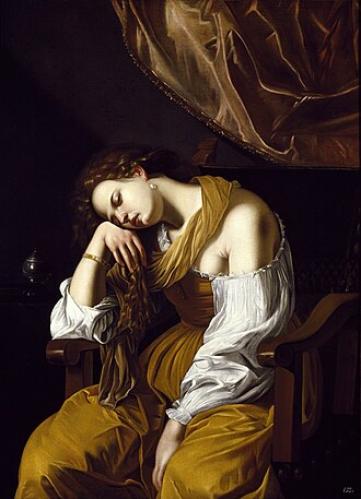
It used to be that I knew not what to say.
I would rummage through the wreckage of language,
searching for some arrangement of syllables
that might bear the weight of what ailed me.
But even words, it seemed,
had their thresholds of endurance.
Then came the days when I knew not what I felt,
nor by what name to summon it.
There was an affliction without a vocabulary,
a language confined to the chambers of the chest,
where even the tongue of silence proved inadequate.
Now, I know not what to think.
The well has grown shallow.
My once-turbulent mind,
that restless parliament of contradictions,
has begun to adjourn without deliberation.
Even chaos, it seems,
has grown weary of inhabiting me.
Ordinarily, one might mistake such stillness for deliverance.
A reprieve from the interminable noise,
the cessation of an inward war.
It ought to be a blessing.
Yet there is something terribly sinister
about a wilderness in which even the winds have died.
Like a tree abandoned to the jurisdiction of harmattan,
I feel my vestiges surrendering one by one;
leaves loosened from their convictions,
carried into some indifferent distance,
until the branches can scarcely remember
the weight of having once been green.
The colours are departing my eyes.
The flowers have begun their quiet apostasy.
And the butterflies, those fleeting little proofs of wonder,
have taken leave of the garden.
I watch them recede,
as though witnessing the migration of everything
I was once capable of loving.
I cannot pursue them.
My hands have long since forgotten
the peculiar grammar of reaching.
I have stood upon this ground before.
A country beyond the jurisdiction of illumination,
where the sun appears to have rescinded its covenant
with the earth.
It is an uncommon country,
though its geography is painfully familiar.
I have gnawed at the marrow of my own existence,
made an adversary of my reflection,
and prosecuted myself for the circumstances
of a birth over which I had no jurisdiction.
Sometimes I wonder
whether a different soil might have yielded a different harvest.
Whether a more merciful roof,
a gentler architecture of beginnings,
might have spared the child
the inheritance of so many unanswered questions.
Perhaps then,
I would not have become so intimately acquainted with worry.
Perhaps the mind would have found other occupations
besides rehearsing the many ways a life can go wrong.
Or perhaps I am guilty of excess.
Do I dream beyond the permissible?
Have I mistaken longing for entitlement?
Do I pursue horizons that were never meant
to accommodate my footsteps?
How much of a man is ambition,
and how much is merely an attempt
to outrun the ruins from which he emerged?
I have asked myself these questions
until even the questions have begun to resemble accusations.
And yet, beneath all this unravelling,
there remains an inconvenient desire.
I wish to bequeath something to this world
that bears no resemblance to what it has given me.
Something softer than grief.
Something that does not demand a wound
before it offers an embrace.
I would spare others the afflictions
that have turned the geography of my passage
into a wilderness.
Let there be, in the wake of my existence,
some small reprieve from the cruelties of being.
Some evidence that suffering need not reproduce itself
to justify the lives it has consumed.
For, truthfully,
it has seldom been about me alone.
And I wonder—
Is it an unreasonable petition,
to have been acquainted with so much desolation
and still wish to leave behind
a little gentleness?
Is that, too,
an extravagance?
Points:
Time spent:
IP address:
Canary word: Present
Possible AI signals:
Original Text:
Are you sure you want to delete this comment? This cannot be undone.
Mark this comment as a review? Points will be awarded to the poster.
Your comment was posted, but it wasn’t long enough to count as a review. Reviews need about four complete sentences (at least 250 characters). Try writing another review that explains your thoughts in more detail — the author will appreciate it, and you’ll earn points for it.
142,833 Literary Works • 680,145 Reviews




I immediately loved the way this opens with, "It used to be that I knew not what to say." I really like the imagery of the narrator rummaging through the wreckage of language, attempting to find something that will bear the weight of what ails them, but nothing seems to suffice. Then the narrator doesn't know what to feel or what to call that feeling. There are no words for the affliction, only what is felt inside. I think that's a really good way of describing it. Sometimes the pain is so great that there are no words to describe it, and all we can do is feel what's inside. I think you describe that inability to express something really well.
Then the narrator loses the will to even think about it. Even the chaos seems to have grown tired. The narrator believes it should be a relief, or that anyone else would see it that way. It ought to be a blessing. And yet, even in the state the narrator is in, they suspect something more sinister. I love the way you describe it as a wilderness where even the winds have died. Anywhere else, to anyone else, it might have felt like relief, but instead the narrator finds themselves in a wilderness where even the wind has stopped. It gives this feeling of being lost, unsure what to think or do. That imagery works so well to describe those feelings.
Then the narrator sees themselves as a tree, losing its leaves, losing the weight of once being green. Everything they once loved seems to be leaving, and the butterflies, those "fleeting little proofs of wonder," have flown away. I especially like that description of the butterflies. This once-living, green garden has become that windless wilderness, and the narrator can do nothing but watch. There's a certain pain and sadness to that. I can feel it as I read. That inability to do anything as everything falls apart, and the emotions that follow such a loss, are displayed really well.
Then the narrator says they cannot pursue those things because their hands have forgotten the "grammar of reaching," again connecting back to the opening lines. The narrator admits to having been here before, having experienced these feelings before. It's a place where even the sun seems to have given up, a truly bleak place. And though the place is uncommon, it's familiar to the narrator.
In this place, the narrator has time to reflect on themselves and their life. They become frustrated with themselves and their circumstances, with being born into something they couldn't control. It connects back to that helpless feeling. The narrator feels so lost and stuck in this wilderness, and yet even here, the mind doesn't stop wondering. They continue to wonder what if? If they had been born differently, would their life have been different? Would they have suffered less? Would they have had fewer unanswered questions?
I think sometimes, as people, we do this thing where we believe if we were just someone else, we'd have a better life or less anxiety. I think I do this, too, where I wonder what it would be like to be someone else. But ultimately, I think everyone has their own struggles, some harder than others. Overall, I don't think there's an escape, no matter who you are, from the natural human experiences of guilt, worry, and pain. But once again, that's just my interpretation.
After that, the narrator wonders if they're guilty of excess. They question whether they dream too big, whether longing has turned into entitlement. I find that really interesting. If, in longing for better circumstances, we've somehow come to believe ourselves entitled to those things we don't have. I wonder if everyone does that sometimes? The narrator also questions whether they're pursuing things they were never meant to have.
But then, in the end, the narrator has this hope that they can leave something meaningful behind, something to show that suffering doesn't have to continue to justify itself. Because the narrator realizes it isn't about themselves alone, but also about those who come after them. They wonder if it's unreasonable to hope that, after all they've gone through, it might be possible to leave behind a little gentleness. And I think that's beautiful.
Because I think it's what sets people apart. No matter who you're born as, or what you go through, it's how you respond to your circumstances and what you leave behind. And I find it so beautiful that after all the narrator has gone through, they still hope to leave something meaningful and beautiful behind. Gentleness. That is really wonderful!
There was so much thought in this poem that gave me so much to think about, and it was so interesting to read! Amazing work! ❤️